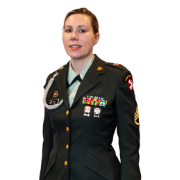
Veterans Outreach Center (VOC) has restructured its employment services, officially rebranding the department as Workforce Development. They have moved beyond traditional job placement assistance to a comprehensive model of career construction designed to serve veterans ranging from entry-level job seekers to experienced professionals seeking career advancement.
Continue readingWhy Peer Connection is the Missing Link in Reintegration
Laura Heltz, Executive Director & U.S. Army Veteran
When you transition out of the military, your checklist seems clear enough:
- Secure your DD-214
- Figure out what VA benefits you’re eligible for
- Find a place to live
- Find a civilian job
These are the important logistical pillars of veteran reintegration, but we’ve worked with veterans who have checked every one of those boxes yet still feel untethered. You can have meaningful employment, be financially stable, and find reliable housing but still struggle with feelings of isolation. Why? Because you left a lot more than a job or a career. Being in the military means living in an all-encompassing culture that, overnight, you’re no longer living in.
The Silence of Civilian Life
After coming from the military, operating as part of a cohesive unit where trust was absolute and everyone defaulted to the shared purpose, you didn’t have to explain your values or translate your experience because the people around you already understood. You were part of a “we.”
Rarely does civilian life give anyone that automatic connection like the military does. In a lot of cases, you’re part of a team, but sometimes everyone has such different jobs on that team that nobody can really relate to what anyone else does or is going through. You often lose the shorthand language and that implicit understanding that someone has your back. The sudden shift from collective strength to individual isolation can be both jarring and a major barrier to true reintegration.
For many veterans, the most exhausting part of reintegration is the constant need to explain yourself. You find yourself editing your stories for civilian ears or trying to describe experiences that don’t have a civilian equivalent. That sudden shift from collective strength to individual isolation can become a major barrier to feeling truly at home. This can be especially true for female veterans, who often face unique experiences in the military.
Related Post: 4 Trauma-Informed Resources for Female Veterans
You Need a “Third Place”
Sociologists talk about the need for a “Third Place,” a physical location that isn’t your home (the “First Place) or workplace (the “Second Place”). The Third Place is where you find community. For veterans, finding a space where you don’t have to edit yourself is essential for mental wellness.
At Veterans Outreach Center, we have built Third Places specifically for veterans.
We designed our Steve Preston Peer Connection Center (PCC) to be the opposite of a clinical waiting room. It looks and feels like a living room, complete with a pool table, TV, and snacks. You don’t need an appointment, and you don’t need to be in crisis to walk through the doors. It is simply a place to sit, decompress, and talk with people who speak your language.
Some veterans bond better while moving toward a shared objective. Our Hiking Group is a perfect example of this. Last year alone, this group hiked over 150 miles and climbed 11,000 feet of elevation together. There is a specific kind of conversation that happens when you are walking side-by-side on a trail that just doesn’t happen anywhere else.
Related Post: How Outdoor Recreation Provides Relief for Veterans
If you aren’t ready to socialize, we also offer tools for physical regulation. Our Morale Center features hydromassage chairs and a quiet atmosphere. It allows you to reset your nervous system and find a moment of peace without anyone asking you “how you’re feeling.” Our Fitness Center lets you exercise your body, which in turn exercises your mind and helps manage stress.
Building Your Civilian Network
Beyond the social aspect, building a peer network is a good career move. Our Workforce Development services provide professional development and networking opportunities to give you the opportunity to upskill, get promoted, or explore your entrepreneurial pursuits.
When you invest time in your professional relationships, you are building a safety net. Isolation is often a precursor to mental health struggles, while connection builds resilience.
You Don’t Have to Do This Alone
You were trained to succeed as part of a team. Attempting to navigate life after service as a solo operator makes the mission harder than it needs to be.
If you have felt that gap in your life since hanging up the uniform, I invite you to stop by. Whether you want to crush some miles on a hiking trail or just relax in a space where nobody asks you to explain your service, the door is open.
Visit us at: Veterans Outreach Center 447 South Avenue, Rochester, NY. No appointment needed.

VOC Announces Don Reeve as New Board Chair
Veterans Outreach Center
We are proud to announce that Don Reeve has been appointed as the new Chair of the Veterans Outreach Center Board of Directors.

Mr. Reeve is a pillar of the Rochester business community, bringing a legacy of operational excellence and executive leadership to VOC. In addition to being a combat veteran of the Vietnam War, he had a remarkable 42-year tenure at Wegmans Food Markets, retiring in 2012 as Senior Vice President and Chief Information Officer.
However, Mr. Reeve’s commitment to service did not end with his corporate career. He has been a dedicated advocate for our mission for years, serving multiple terms on the VOC Board of Directors, including five years as Board Chair. His return to this leadership role further exemplifies his commitment to expanding our impact and ensuring the long-term sustainability of our programs.
“We are incredibly fortunate to have Don return as Board Chair to guide our strategic vision in 2026,” Veterans Outreach Center Executive Director & U.S. Army Veteran Laura Heltz said. “His decades of executive leadership and deep institutional knowledge of VOC make him the perfect partner to help us expand our impact. Don is truly invested in ensuring every veteran has the resources to rise.”
“Returning to lead the Board is a privilege I take to heart because I know firsthand the life-changing impact this organization delivers for our community,” Mr. Reeve said. “I look forward to working with this incredible team to ensure we are doing everything possible to serve those who served us.”
Please join us in welcoming Mr. Reeve back to the helm. With his leadership and your continued support, we look forward to a year of unprecedented impact for our local veterans.
4 Trauma-Informed Resources for Female Veterans
Annmarie Cunningham, Care Manager - Female Veteran Focus
Many female veterans may face challenges that often go unseen, and when you come home from service, “safety” can often take on a different meaning. Experiences after separation may include balancing family responsibilities, processing difficult or traumatic experiences, or searching for housing and support that feels secure and stable.
We built our female veteran program because healing can’t happen without safety. We want to make sure you know about four specific, trauma-informed resources you can use to maintain or reclaim your sense of security.
1. Otto’s Phoenix House
If you’re facing housing instability, traditional shelters may not always be suitable for female veterans. Some shelters might separate mothers from their children or can’t accommodate families.
We opened Otto’s Phoenix House (OPH) in early 2025, and it’s the only shelter specifically designed for female veterans and their children in our area. OPH prioritizes security and privacy so you can focus on stability and move toward permanent independence.
Related Post: Why Economic Stability is a Critical Issue for Female Veterans
2. Hydromassage Therapy & Reiki
We know that there can be a connection between physical pain and emotional trauma. The VA reports that about one in three female veterans experienced sexual harassment or assault while serving. For those with MST, traditional massage or physical therapy can be difficult.
Our Morale Center offers a hydromassage chair that provides the benefits of a traditional massage, like stress reduction, pain relief, and better circulation, but without any direct physical contact. Similarly, Reiki therapy offers a natural holistic energy therapy of Japanese Origins. This gentle treatment reduces stress, promotes relaxation, and enhances the body’s natural healing ability.
Related Post: Reinterpreting Veteran Needs for the Future of Services
3. Women-Only Support Groups
Isolation can be a difficult part of transitioning back to civilian life after military service. For some women who served, it may feel challenging to find spaces where their experiences are understood. A space that allows for understanding without judgment can be especially valuable.
“Just Because… We Are Women” is one of the many veteran groups we facilitate and is designed to give you the space and camaraderie to not feel so alone. This group is run by women and is for female veterans only. We also offer a women’s crafting group for those who love to create, and the goal is the same: community, camaraderie, and connection. We want to build something where you feel seen, heard, and physically and emotionally secure among peers who have walked a similar path.
4. Wellness Services
Access to essential resources is closely tied to the ability to heal. When individuals are navigating food insecurity or unmet health needs, it can affect both physical and emotional well-being. Our Quartermaster services, fitness center, and outdoor recreation programs support trauma recovery by addressing these foundational needs and helping restore a sense of security.
The Quartermaster program provides food, clothing, and basic hygiene essentials free of charge to make sure that you have what you need to live a healthy lifestyle. Similarly, our fitness center is a place where you can reconnect with your physical strength on your own terms. Both resources are here to help you rebuild your foundation, so you can focus on the bigger picture of your health and happiness.
Our outdoor recreation program offers another outlet for healing centered around nature. Through our Hiking and Outdoor Open groups, you have multiple opportunities and ways to build resilience and camaraderie.
Related Post: Backed by Research: Benefits of Mindfulness for Veterans with PTSD
You don’t have to navigate this alone.
If you want to learn more about any of these resources or just want to talk to someone who gets it, please contact us today at 585.546.1081 or visit us at 447 South Avenue, Rochester, NY.