
4 Trauma-Informed Resources for Female Veterans

Picture of Annmarie Cunningham, Care Manager - Female Veteran Focus

Annmarie Cunningham, Care Manager - Female Veteran Focus

Many female veterans may face challenges that often go unseen, and when you come home from service, “safety” can often take on a different meaning. Experiences after separation may include balancing family responsibilities, processing difficult or traumatic experiences, or searching for housing and support that feels secure and stable. 

We built our female veteran program because healing can’t happen without safety. We want to make sure you know about four specific, trauma-informed resources you can use to maintain or reclaim your sense of security. 


1. Otto’s Phoenix House 


If you’re facing housing instability, traditional shelters may not always be suitable for female veterans. Some shelters might separate mothers from their children or can’t accommodate families. 

We opened Otto’s Phoenix House (OPH) in early 2025, and it’s the only shelter specifically designed for female veterans and their children in our area. OPH prioritizes security and privacy so you can focus on stability and move toward permanent independence.


Related Post: Why Economic Stability is a Critical Issue for Female Veterans


2. Hydromassage Therapy & Reiki 


We know that there can be a connection between physical pain and emotional trauma. The VA reports that about one in three female veterans experienced sexual harassment or assault while serving. For those with MST, traditional massage or physical therapy can be difficult.  

Our Morale Center offers a hydromassage chair that provides the benefits of a traditional massage, like stress reduction, pain relief, and better circulation, but without any direct physical contact. Similarly, Reiki therapy offers a natural holistic energy therapy of Japanese Origins. This gentle treatment reduces stress, promotes relaxation, and enhances the body’s natural healing ability.

 Related Post: Reinterpreting Veteran Needs for the Future of Services 

3. Women-Only Support Groups


Isolation can be a difficult part of transitioning back to civilian life after military service. For some women who served, it may feel challenging to find spaces where their experiences are understood. A space that allows for understanding without judgment can be especially valuable. 

“Just Because… We Are Women” is one of the many veteran groups we facilitate and is designed to give you the space and camaraderie to not feel so alone. This group is run by women and is for female veterans only. We also offer a women’s crafting group for those who love to create, and the goal is the same: community, camaraderie, and connection. We want to build something where you feel seen, heard, and physically and emotionally secure among peers who have walked a similar path.


4. Wellness Services


Access to essential resources is closely tied to the ability to heal. When individuals are navigating food insecurity or unmet health needs, it can affect both physical and emotional well-being. Our Quartermaster services, fitness center, and outdoor recreation programs support trauma recovery by addressing these foundational needs and helping restore a sense of security.  

The Quartermaster program provides food, clothing, and basic hygiene essentials free of charge to make sure that you have what you need to live a healthy lifestyle. Similarly, our fitness center is a place where you can reconnect with your physical strength on your own terms. Both resources are here to help you rebuild your foundation, so you can focus on the bigger picture of your health and happiness.   

Our outdoor recreation program offers another outlet for healing centered around nature. Through our Hiking and Outdoor Open groups, you have multiple opportunities and ways to build resilience and camaraderie. 


Related Post: Backed by Research: Benefits of Mindfulness for Veterans with PTSD 


You don’t have to navigate this alone. 

If you want to learn more about any of these resources or just want to talk to someone who gets it, please contact us today at 585.546.1081 or visit us at 447 South Avenue, Rochester, NY. 

Backed by Research: Benefits of Mindfulness for Veterans with PTSD

Picture of Jeff Klein, Wellness Programs Manager

Jeff Klein, Wellness Programs Manager

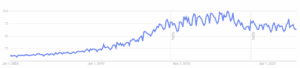
As access to mental health research and resources has grown over the years, a number of studies have been conducted to identify the benefits of mindfulness. A quick look at Google Trends shows that interest in web searches for “mindfulness” has increased significantly over the past 10 years. Interestingly, searches for “mindfulness” reached 100 (peak popularity) in April 2020. Presumably, this is due to people searching for ways to cope with the stress of the pandemic. The chart below shows the growth of mindfulness Google searches from 2004 (ranking 10) through June 2025 (ranking 64).

A note on the “Interest over time” rankings from Google: “Numbers represent search interest relative to the highest point on the chart for the given region and time. A value of 100 is the peak popularity for the term. A value of 50 means that the term is half as popular. A score of 0 means there was not enough data for this term.”  

As interest in mindfulness surged, researchers began exploring the benefits specifically for veterans with post-traumatic stress disorder (PTSD) and found some positive results.  

What is Mindfulness?

The American Psychological Association defines mindfulness as “awareness of one’s internal state and surroundings. The concept has been applied to various therapeutic interventions – for example, mindfulness-based cognitive behavior therapy, mindfulness-based stress reduction, and mindfulness meditation – to help people avoid destructive or automatic habits and responses by learning to observe their thoughts, emotions, and other present-moment experiences without judging or reacting to them.” 

In short, it’s the practice of being aware of your mind, body, and feelings in the present moment to create feelings of calm.  

The Mayo Clinic states that “spending too much time planning, problem-solving, daydreaming, or thinking negative or random thoughts can be draining and make you more likely to experience stress, anxiety, and symptoms of depression.” For veterans with PTSD or other mental health challenges, stress, anxiety, and symptoms of depression may stem from experiences during their military service.  

Mindfulness and PTSD 

 1. Mindfulness-Based Processes of Healing for Veterans with Post-Traumatic Stress Disorder  

A research paper from the National Library of Medicine titled Mindfulness-Based Processes of Healing for Veterans with Post-Traumatic Stress Disorder conducted a study using in-depth interviews with 15 veterans after attending multiple mindfulness sessions. All veterans in the study had a positive PTSD diagnosis, and the results were promising:  

Veterans identified six core areas that the mindfulness sessions helped with:  

  1. Dealing with the Past: Helped deal with memories differently and created interest/curiosity in how they got to where they are. They also opened the possibility of revisiting locked away memories and allowed them to come to a better understanding of themselves. One participant described finding “that peace and forgiveness, and I can start to relieve some of that guilt.”  

  2. Staying in the Present: Participants reported feeling less caught up in thoughts about past or future events as a key skill, offering protection from distressing thoughts about the past.  

  3. Acceptance of Adversity: Participants said the mindfulness activities helped them accept their current reality, even when it was challenging, and allowed them to see pain in a different light.  

  4. Breathing Through Stress: This gave the participants an alternative to stressful situations and allowed them a moment to work through their stress first before reacting.  

  5. Relaxation: Helped participants feel more relaxed and physically better. Some said it helped them fall asleep and described a “warmness” in the body and a “cleansing feeling.”  

  6. Openness to Self: The mindfulness activities helped the participants become kinder to themselves, which enhanced their relationships. Some described the group structure of the activities and instruction as helping them become more open to others.  

2. VA Management Brief No. 88: Evidence Map of Mindfulness  

A Management Brief from the Department of Veterans Affairs (VA) reported that “the most consistent beneficial effect for various mindfulness interventions was reported for depression. Published meta-analyses of MBSR also indicated beneficial effects compared to passive control (e.g., no intervention) on overall health and psychological outcomes and for chronic illness. In addition, reviews indicated positive effects of Mindfulness-based Cognitive Therapy (MBCT) for mental illness and of various mindfulness interventions for somatization disorders.”  

In short, mindfulness activities showed to help with symptoms of depression, overall health, mental illness, and chronic illness. It also helped with “somatization,” or the conversion of a mental state, such as depression or anxiety, into physical symptoms.  

3. VA Researcher Exploring Meditation as a Therapy for PTSD  

An article from the VA Office of Research & Development, VA Researcher Exploring Meditation as a Therapy for PTSD, reported that Dr. Ariel Lang, Director of the Center of Excellence for Stress and Mental Health at the VA San Diego Healthcare System and Clinical Phycologist and Professor at University of California San Diego found a connection between mindfulness/meditation and relief from PTSD symptoms.  

“You can think of PTSD in some way as an attention disorder,” Dr. Lang said. “What happens when someone has a flashback or an unwanted memory is their attention is diverted to someplace else, someplace they don’t want to think about right now. If you think about it that way, managing PTSD is about keeping your attention where you want it to be. One thing that meditation does – and this is certainly true of mindfulness meditation – is help to train attention.  

“PTSD is also a disorder of arousal, so you get the jumpiness, the physical sensations, the panic-like symptoms. It looks like meditations such as mantram repetition and transcendental meditation may be really helpful for easing hyperarousal symptoms.”  

Helping Veterans Find Calm  

While there is still more research to be done, it’s becoming clearer that there are real benefits for veterans experiencing symptoms of PTSD through mindfulness activities. Veterans Outreach Center offers a weekly Meditation Monday group where veterans engage in somatic breathwork, which focuses on control and awareness of the breath to enhance overall well-being. Contact us today to learn more about our mindfulness and other health and wellness programs. 

Reinterpreting Veteran Needs for the Future of Services

Picture of Laura Heltz, Executive Director & U.S. Army Veteran

Laura Heltz, Executive Director & U.S. Army Veteran

The understood contract between our country and its veterans has historically centered on tangible forms of compensation and care, such as access to medical services, benefits, shelter, and assistance in finding secure and meaningful civilian employment. These obligations are, without question, foundational pillars of our societal responsibility for those who wore our nation’s uniform. Yet, as we continue to assess the veteran support landscape, a more encompassing understanding of “need” requires our consideration. Veterans Outreach Center (VOC) has witnessed the evolving lives of veterans since its inception in 1973, and in the same way our founders felt, we are compelled to continually reevaluate the traditional models of veteran services to keep up with their changing needs and preferences.   

Well-Being, Connection, and Purpose

The evolution of veteran services emphasizes the transition from solely receiving foundational benefits to striking a balance between transactional benefits and holistic well-being. This evolving transition prioritizes:  

  • Comprehensive well-being that extends beyond baseline “fixes” of specific ailments to encompass the overall physical, mental, and emotional flourishing. It implies an approach that empowers veterans to be active agents in their journey toward sustained health.  

  • While economic stability is a primary need, many veterans seek to apply their unique skills and military experiences to a job or career that provides them with inherent meaning – a demonstrable contribution to society and their community.  

Related Post: Why Economic Stability is a Critical Issue for Female Veterans

  • True reintegration extends beyond the basic utilization of services, instead signifying paths for veterans to navigate and find meaningful participation in the broader community. 

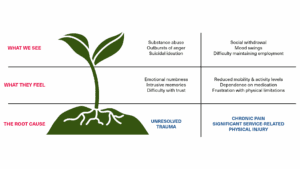
Instead of merely treating symptoms, we must diagnose and resolve the root causes of veteran challenges. A food pantry might address hunger, but the underlying issue could be unemployment. If job assistance isn’t enough, the ultimate root might be a lack of community and connection, which can be found at peer support groups. We understand this at VOC and structure our services in a way that allows us to treat the symptoms while working toward the identification and resolution of the root causes.

Becoming a Center of Holistic Support  

At VOC, we’re proud to embrace a comprehensive understanding of veteran services. We don’t purely serve as a conduit or middleman for foundational services; instead, we strive to go beyond that and provide individualized, holistic support that serves the entire veteran as a human.  

Healing Through Hydromassage  

In addition to offering established wellness initiatives like art therapy, outdoor recreation groups, and mindfulness practices, we recognize the need to support veterans navigating other service-related health challenges. Hydromassage is an effective method for pain management in a safe and supportive environment.  

For instance, veterans exposed to Agent Orange often face conditions like peripheral neuropathy. This causes numbness, tingling, or prickling in the toes or fingers in the early stages that can spread to the feet or hands. In later stages, it can cause burning, throbbing, or shooting pain that is worse at night. Hydromassage, as a therapeutic modality, demonstrates potential for alleviating neuropathic symptoms through improved circulation and pain reduction.  

The U.S. Department of Veterans Affairs (VA) states that one in three female veterans reports that they experienced sexual harassment or assault while in the military. For these veterans battling the intertwined burdens of military sexual trauma (MST) and chronic pain, traditional, hands-on therapies can be problematic. The experience of MST violates personal boundaries and can lead to touch aversion, hypervigilance, and the potential for physical touch to trigger distressing memories or physiological stress responses. Hydromassage is a beneficial alternative, delivering the therapeutic effects of massage, such as pain alleviation, stress reduction, and improved circulation, without direct physical contact. This creates a crucial sense of safety, control, and alignment with trauma-informed care principles.  

The Power of Peer Support  

We actively cultivate opportunities for communal engagement, from peer support programs to shared activity groups, all hosted within a welcoming environment designed to help veterans feel safe, understood, and supported. The effectiveness of peer support for veterans is particularly notable, stemming from the connection forged through shared lived experiences, especially military service and often personal recovery journeys. This common ground grows empathy, reduces the stigma often associated with seeking help, and builds upon the inherent trust and camaraderie of military culture. This deeply relational support translates into significant positive outcomes, including reductions in PTSD symptoms, depression, and anxiety, alongside increased empowerment and self-efficacy.  

Our Steve Preston Peer Connection Center (PCC) gives veterans a space to come together and connect. Groups such as the Men’s Recovery Group, Cultivating Resilience, and Open Art Studio are led by a licensed clinician or certified peer specialist, serving as vital bridges that guide fellow veterans through complex systems and encourage sustained engagement with care and support. These programs enhance social integration and combat feelings of isolation.  

A study from the VA revealed a significant correlation between the frequency of engagement with peer specialists and positive changes in psychiatric symptoms. Veterans who had over twelve contacts with a peer specialist (“high engagers”) were substantially more likely to experience reliable positive symptom changes (over 40%) compared to those with fewer than twelve contacts (“low engagers,” 24%) and a control group (11%). While no significant differences in hope were observed between groups, these results strongly suggest that more frequent, sustained interactions with peer specialists yield greater mental health benefits. 

Fitness for Physical and Mental Resilience  

Regular exercise offers physical benefits, which are crucial for addressing the high incidence of musculoskeletal injuries among veterans, improving cardiovascular health, and aiding in weight management. For those with service-related injuries, adaptive exercise ensures these benefits remain accessible.  

The mental health advantages of exercise are equally compelling. Physical activity elevates mood and alleviates symptoms of PTSD, depression, and anxiety. It also enhances sleep quality, improves cognitive functions like memory and concentration, which are often impaired by trauma, and provides a valuable sense of routine, purpose, and empowerment. For many veterans transitioning to civilian life, the discipline and accomplishment derived from a fitness regimen, coupled with the potential for social interaction in group settings, are invaluable tools for resilience and adaptation.  

At the height of the COVID-19 pandemic, a time of significant stress and isolation, we safely opened our on-site fitness center, giving veterans a vital and safe space to continue working on both their physical and mental health.   

Related Post: Tips for Veterans to Build and Maintain an Exercise Routine for Lasting Mental Health Benefits  

Strengthening the Whole Veteran  

Providing the fundamental entitlements of veterans remains a critical societal duty. However, a thoughtful consideration of the path forward, particularly within communities like ours in Rochester, New York, mandates an expansion of society’s vision of veteran services. To honor service is to facilitate stability and conditions for flourishing. By nurturing and strengthening the complete well-being of our veterans, we simultaneously enrich the vitality and strength of our community.

How Outdoor Recreation Provides Relief for Veterans

Picture of Jeff Klein, Wellness Programs Manager

Jeff Klein, Wellness Programs Manager

Without a doubt, navigating mental health challenges is one of the hardest things a person can go through. Between the racing thoughts, anxiety, and fear – or even a veteran who just needs to blow off some steam – finding help can be difficult. Traditional mental health care is important for treatment, but it’s not a universal solution.

However, outdoor recreation offers a different approach that some veterans find liberating. Research continues to show that it is a powerful and effective tool for veterans.

Nature’s Healing Power

Whether it’s due to communication barriers, past experiences, or just feeling disconnected, the limitations of standard approaches have sparked conversation about more holistic and personalized paths to healing. A study in the National Library of Medicine says that exposure to nature significantly improves mental health and well-being by reducing stress, anxiety, and depression. Researchers found that spending time in natural environments could help people make calmer, more thoughtful decisions and feel more relaxed.

The healing occurs through multiple mechanisms:

  • Natural environments provide gentle, non-demanding stimuli that facilitate mental restoration without overwhelming the senses.
  • ·Activities like hiking provide physical exercise, which releases endorphins and can improve one’s sense of well-being and reduce stress.
  • ·Group outdoor programs create spaces of shared understanding where veterans can talk and reduce feelings of isolation. This can help veterans form support systems.

Outdoor recreation is a holistic approach that recognizes each veteran’s unique journey. From fishing trips that teach patience to hiking trails that rebuild confidence, these experiences help veterans create tools for long-term resilience and build camaraderie.

The Ongoing Journey

Nature doesn’t promise all – or instant – solutions, but it offers veterans a space to breathe, reflect, and rebuild. Contact us today to learn more about how you can get involved in VOC’s outdoor program.