Reinterpreting Veteran Needs for the Future of Services

Picture of Laura Heltz, Executive Director & U.S. Army Veteran

Laura Heltz, Executive Director & U.S. Army Veteran

The understood contract between our country and its veterans has historically centered on tangible forms of compensation and care, such as access to medical services, benefits, shelter, and assistance in finding secure and meaningful civilian employment. These obligations are, without question, foundational pillars of our societal responsibility for those who wore our nation’s uniform. Yet, as we continue to assess the veteran support landscape, a more encompassing understanding of “need” requires our consideration. Veterans Outreach Center (VOC) has witnessed the evolving lives of veterans since its inception in 1973, and in the same way our founders felt, we are compelled to continually reevaluate the traditional models of veteran services to keep up with their changing needs and preferences.   

Well-Being, Connection, and Purpose

The evolution of veteran services emphasizes the transition from solely receiving foundational benefits to striking a balance between transactional benefits and holistic well-being. This evolving transition prioritizes:  

  • Comprehensive well-being that extends beyond baseline “fixes” of specific ailments to encompass the overall physical, mental, and emotional flourishing. It implies an approach that empowers veterans to be active agents in their journey toward sustained health.  

  • While economic stability is a primary need, many veterans seek to apply their unique skills and military experiences to a job or career that provides them with inherent meaning – a demonstrable contribution to society and their community.  

Related Post: Why Economic Stability is a Critical Issue for Female Veterans

  • True reintegration extends beyond the basic utilization of services, instead signifying paths for veterans to navigate and find meaningful participation in the broader community. 

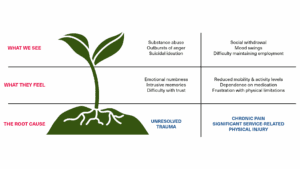
Instead of merely treating symptoms, we must diagnose and resolve the root causes of veteran challenges. A food pantry might address hunger, but the underlying issue could be unemployment. If job assistance isn’t enough, the ultimate root might be a lack of community and connection, which can be found at peer support groups. We understand this at VOC and structure our services in a way that allows us to treat the symptoms while working toward the identification and resolution of the root causes.
Becoming a Center of Holistic Support  

At VOC, we’re proud to embrace a comprehensive understanding of veteran services. We don’t purely serve as a conduit or middleman for foundational services; instead, we strive to go beyond that and provide individualized, holistic support that serves the entire veteran as a human.  

Healing Through Hydromassage  

In addition to offering established wellness initiatives like art therapy, outdoor recreation groups, and mindfulness practices, we recognize the need to support veterans navigating other service-related health challenges. Hydromassage is an effective method for pain management in a safe and supportive environment.  

For instance, veterans exposed to Agent Orange often face conditions like peripheral neuropathy. This causes numbness, tingling, or prickling in the toes or fingers in the early stages that can spread to the feet or hands. In later stages, it can cause burning, throbbing, or shooting pain that is worse at night. Hydromassage, as a therapeutic modality, demonstrates potential for alleviating neuropathic symptoms through improved circulation and pain reduction.  

The U.S. Department of Veterans Affairs (VA) states that one in three female veterans reports that they experienced sexual harassment or assault while in the military. For these veterans battling the intertwined burdens of military sexual trauma (MST) and chronic pain, traditional, hands-on therapies can be problematic. The experience of MST violates personal boundaries and can lead to touch aversion, hypervigilance, and the potential for physical touch to trigger distressing memories or physiological stress responses. Hydromassage is a beneficial alternative, delivering the therapeutic effects of massage, such as pain alleviation, stress reduction, and improved circulation, without direct physical contact. This creates a crucial sense of safety, control, and alignment with trauma-informed care principles.  

The Power of Peer Support  

We actively cultivate opportunities for communal engagement, from peer support programs to shared activity groups, all hosted within a welcoming environment designed to help veterans feel safe, understood, and supported. The effectiveness of peer support for veterans is particularly notable, stemming from the connection forged through shared lived experiences, especially military service and often personal recovery journeys. This common ground grows empathy, reduces the stigma often associated with seeking help, and builds upon the inherent trust and camaraderie of military culture. This deeply relational support translates into significant positive outcomes, including reductions in PTSD symptoms, depression, and anxiety, alongside increased empowerment and self-efficacy.  

Our Steve Preston Peer Connection Center (PCC) gives veterans a space to come together and connect. Groups such as the Men’s Recovery Group, Cultivating Resilience, and Open Art Studio are led by a licensed clinician or certified peer specialist, serving as vital bridges that guide fellow veterans through complex systems and encourage sustained engagement with care and support. These programs enhance social integration and combat feelings of isolation.  

A study from the VA revealed a significant correlation between the frequency of engagement with peer specialists and positive changes in psychiatric symptoms. Veterans who had over twelve contacts with a peer specialist (“high engagers”) were substantially more likely to experience reliable positive symptom changes (over 40%) compared to those with fewer than twelve contacts (“low engagers,” 24%) and a control group (11%). While no significant differences in hope were observed between groups, these results strongly suggest that more frequent, sustained interactions with peer specialists yield greater mental health benefits. 

Fitness for Physical and Mental Resilience  

Regular exercise offers physical benefits, which are crucial for addressing the high incidence of musculoskeletal injuries among veterans, improving cardiovascular health, and aiding in weight management. For those with service-related injuries, adaptive exercise ensures these benefits remain accessible.  

The mental health advantages of exercise are equally compelling. Physical activity elevates mood and alleviates symptoms of PTSD, depression, and anxiety. It also enhances sleep quality, improves cognitive functions like memory and concentration, which are often impaired by trauma, and provides a valuable sense of routine, purpose, and empowerment. For many veterans transitioning to civilian life, the discipline and accomplishment derived from a fitness regimen, coupled with the potential for social interaction in group settings, are invaluable tools for resilience and adaptation.  

At the height of the COVID-19 pandemic, a time of significant stress and isolation, we safely opened our on-site fitness center, giving veterans a vital and safe space to continue working on both their physical and mental health.   

Related Post: Tips for Veterans to Build and Maintain an Exercise Routine for Lasting Mental Health Benefits  

Strengthening the Whole Veteran  

Providing the fundamental entitlements of veterans remains a critical societal duty. However, a thoughtful consideration of the path forward, particularly within communities like ours in Rochester, New York, mandates an expansion of society’s vision of veteran services. To honor service is to facilitate stability and conditions for flourishing. By nurturing and strengthening the complete well-being of our veterans, we simultaneously enrich the vitality and strength of our community.

Why Economic Stability is a Critical Issue for Female Veterans

Picture of Laura Heltz, Executive Director & U.S. Army Veteran

Laura Heltz, Executive Director & U.S. Army Veteran

Rochester—and the nation as a whole—has come a long way in recognizing and honoring military veterans, especially those from the Vietnam era who still carry the pain of a difficult homecoming. But beyond the welcome home lies a deeper, ongoing challenge—particularly for women veterans transitioning back into civilian life: the fight for economic stability.

This financial struggle, often overlooked, has a profound effect on their overall well-being and ability to reintegrate successfully. In 2023, 65% of female veterans across the country reported not having enough money to make ends meet. Understanding how this issue plays out locally, here in Rochester, is not just important—it’s urgent.

Economic stability is the bedrock upon which health, housing security, and overall quality of life are built. For the female veterans who call Rochester home, financial hurdles can turn their transition from service into another battle for them to fight.

The Unique Economic Battlefield for Rochester’s Female Veterans 

While military service equips people with invaluable skills and discipline, achieving financial security in the civilian world often presents obstacles for female veterans. 

  • Employment and Underemployment Challenges: National data reveals women veterans frequently face higher unemployment rates than their male counterparts, even with comparable or higher education levels. However, these women bring unique skills and experiences from their military service that can greatly benefit the civilian workforce. Are female veterans finding equitable opportunities within Rochester’s diverse job market, spanning healthcare, optics, education, and advanced manufacturing? They may grapple with translating their military experience into terms that civilian employers readily understand. What’s more, gender bias can lead to their skills being undervalued, or they may encounter outdated perceptions that question their status as “real” veterans compared to men, potentially impacting hiring and advancement opportunities. 

  • The Wage Gap and Local Cost of Living: Like many women in the civilian workforce, female veterans often earn less than male veterans. This disparity is frequently linked to occupational segregation, which concentrates women in traditionally lower-paying fields. When considered against the cost of living, including housing, transportation, and utilities, this wage gap becomes even more impactful, making it significantly harder for female veterans, especially heads of households, to achieve financial footing. 

  • Compounding Factors Magnifying Financial Strain: Some female veterans are single parents or primary caregivers, adding another layer of complexity. The availability and high cost of quality childcare can directly limit employment options or consume a large portion of their income.  Additionally, the lasting impacts of military service—such as chronic pain, service-connected disabilities, or Post-Traumatic Stress Disorder (PTSD) resulting from combat or Military Sexual Trauma (MST)—can make it difficult for veterans to maintain steady employment and achieve their full earning potential. Accessing business loans or capital can present further barriers for entrepreneurship. 

Why Economic Stability is Critical 

Addressing these financial challenges is important for several interconnected reasons that directly impact the health and vitality of our community: 

  • Foundation for Overall Well-being: Financial stress is intrinsically linked to adverse health outcomes. Economic instability can exacerbate anxiety and depression, delay necessary medical or dental care, and hinder access to specialized services unique to veterans’ needs. Stability provides the means for secure housing, nutritious food, and consistent healthcare access – fundamental components of well-being. 

  • Preventing Negative Outcomes like Homelessness: The link between financial hardship and housing instability is stark. Female veterans are already at a higher risk of homelessness compared to both male veterans and non-veteran women nationally. High housing costs can push financially vulnerable female veterans closer to the edge. Ensuring economic stability is an essential preventative measure against homelessness, reducing the strain on emergency services, and promoting dignity. 

Related Post: Understanding the Female Veteran Homelessness Crisis 

  • Enabling Successful Transition and Community Contribution: When female veterans are economically secure, they are empowered to fully utilize the exceptional skills, leadership qualities, and resilience gained through service. They actively contribute to Rochester’s economy and civic life, enriching our workplaces and neighborhoods. Financial stability promotes independence and benefits our entire community. 

Resources and the Path Forward

While resources exist, ensuring they effectively reach and serve Rochester’s female veterans requires ongoing attention and immediate local action. 

Identifying Local Gaps 

We must ask critical questions here in Rochester: Are there enough local initiatives explicitly focused on financial literacy, career counseling tailored to female veterans, affordable childcare solutions, and support for female veteran entrepreneurs? The need for these initiatives is clear, and it’s up to us as a community to ensure they exist and are effective. Is there sufficient awareness among Rochester-area employers regarding the unique value and potential transition challenges of female veterans? Do local homeless service providers have the resources to fully address the safety and support needs of female veterans? These are the questions that need our attention and action. 

 Veterans Outreach Center offers a strong foundation of services for female veterans, but meeting their needs requires the involvement of the entire community. Our recently opened Otto’s Phoenix House provides transitional housing for female veterans who need additional time and support before settling into a home of their own. Designed for veterans who are actively working toward personal and professional stability, Otto’s Phoenix House offers a place to heal, rebuild, and prepare for the next chapter in life.  It places an emphasis on community and accountability, ensuring that every veteran has the tools needed to transition successfully into long-term, independent housing. 

Related Post: How Outdoor Recreation Provides Relief for Veterans 

A Call to Action for the Rochester Community

  • Employers: Learn how military skills, including those from non-combat roles, translate to civilian success. Offer mentorship opportunities. Partner with veteran service organizations.

  • Service Providers: Ensure services are trauma-informed, gender-responsive, and easily accessible. Collaborate across organizations to provide holistic support addressing interconnected needs like housing, healthcare, childcare, and employment.

  • Community Leaders & Citizens: Advocate for policies and programs that support female veterans’ economic stability. This could include advocating for affordable childcare solutions and increasing awareness of the distinct struggles faced by female veterans. Challenge biases and stereotypes when you encounter them. Support local organizations working directly with veterans. Raise awareness about these issues. Policymakers, your role is crucial in shaping the systemic changes needed to address these issues. Advocate for policies that promote affordable housing and accessible healthcare for female veterans.

Related Post: The Long-Term Effects of Low-Level Blasts: New Legislation Offers Hope for Disability Benefits

 Investing in Rochester’s Female Veterans is an Investment in Rochester 

All too often, the journey from military service to civilian life presents distinctive financial hurdles for many female veterans in Rochester. These challenges demand our focus and collective effort. Prioritizing the economic stability of female veterans is not only a way to honor their service—it’s also an investment in the strength, diversity, and prosperity of the Rochester community as a whole. Let’s work together to ensure that the women who said yes for our country have the resources and opportunities to build secure and prosperous futures at home.

Your support, whether through volunteering, advocacy, or financial support, can make a significant difference in the lives of our veterans. Click here to get started or learn how you can support our mission.

From Scrub Tech to Trailblazing Advocate: Marlene Roll’s Unstoppable Service to Veterans

Veterans Outreach Center

This Women’s History Month, Veterans Outreach Center celebrates Marlene Roll, a woman whose life is a powerful testament to the impact of dedicated service. From her time as an Army Operating Room Technician to her groundbreaking leadership within the Veterans of Foreign Wars (VFW) and beyond, Marlene has consistently broken barriers and championed the cause of her fellow veterans. Her story is one of resilience, leadership, and a deep-seated passion for advocacy.

Marlene’s journey began in 1986 when she enlisted in the US Army Reserve. Her eight years of service, including deployment during Operation Desert Shield/Desert Storm, saw her excel as an Operating Room Technician, earning commendations for her resourcefulness and initiative and achieving the rank of Sergeant. This demanding experience laid the foundation for a lifetime of service. 

Upon returning home, Marlene immersed herself in the veteran community, joining the VFW in 1991. Often the first woman to hold many positions she filled, she served three terms as Post Commander, rose to Erie County Commander, and, in 2015-16, became the Department Commander for New York State. Throughout her VFW career, she held crucial roles, including Special Recruiter, Membership Chairman, Patriotic Instructor, Chief of Staff (for two terms), State Inspector, and Women Veteran Chairperson (for three terms). She even formed a new, ‘Female Focused’ VFW post – the first of its kind in the nation, Kubik/Galloway Post #12097, in 2010. 

Her influence and advocacy extended to the national level, where she served as a Certified National Recruiter for 13 years, a VA Accredited Veterans Service Officer, a member of the National Legislative Committee for many years, and a key National Women’s Committee member. Marlene testified before Congress on the critical issue of sexual assault in VA Hospitals, demonstrating her fearless commitment to addressing complex challenges facing veterans. She held dual accreditation with the American Legion and the VFW. 

As Director of Erie County Veterans Services, she spearheaded initiatives to connect with the veteran community, including partnering with local organizations to conduct Town Hall Outreaches, creating a database of unemployed veterans to circulate job opportunities, and organizing job fairs. She established a weekly presence in the Buffalo Veterans’ Treatment Court, assisting veterans with claims and services. As Interim Director of Monroe County Veterans Service Agency, she helped modernize the agency. She later continued this crucial work as an Assistant Department Service Officer for the Department of New York VFW. 

However, Marlene’s commitment extends far beyond the VFW and government agencies. Her extensive involvement in organizations like the Military Order of the Cooties, American Legion, 40 & 8, DAV, and Am Vets, as well as her service on numerous boards (Higher Ground NY, WNY National VA Cemetery, Buffalo Naval & Military Park, and the VA Batavia Veteran’s Home), showcases her holistic approach to veteran support. As of 2023, she is President of the New York State Council of Veteran Organizations. 

Beyond her advocacy, Marlene is a successful entrepreneur. For 17 years, she used her business acumen and dedication to providing quality care to design, build, and operate Tri-County Kennel, Inc. 

Marlene’s passion is also evident in her role as a mentor. She serves as a Veteran Mentor in Judge Russell’s Veterans Treatment Court and a Veteran Advisor to PACT, now the Veterans Experience Committee, at the Buffalo VA, guiding veterans through complex systems and providing invaluable support. Her tireless work has directly improved the lives of many veterans, and her impact is recognized with the Susan B. Anthony Award and induction into the NYS Veterans Hall of Fame. 

“While I may have been naïve going into the military, it has given me many life lessons and opportunities and has made me who I am today,” Marlene said. “I choose to continue to serve my veteran community out of passion for those who have also served our great country and the families they left behind while volunteering or drafted.” 

Marlene Roll, supported by her husband, Jim, for 38 years, is a true trailblazer. She embodies the spirit of selfless service, breaking down barriers and paving the way for future generations of women veterans. This Women’s History Month, we salute Marlene – a dedicated advocate, a proven leader, and an inspiration.

Understanding the Female Veteran Homelessness Crisis

Picture of Laura Heltz, Executive Director & U.S. Army Veteran

Laura Heltz, Executive Director & U.S. Army Veteran

For female veterans, the transition to civilian life can be full of unique challenges, and for some, it leads to the devastating reality of homelessness. This isn’t a simple issue with easy answers; it’s a complex web of trauma, economic hardship, and systemic barriers. To truly understand and address this crisis, we have to look deeper than the surface and recognize the specific struggles faced by women who have served.

Understanding the Scope of the Problem 

The statistics paint a concerning picture. Female veterans are at a higher risk of homelessness compared to male veterans and civilian women. Data from the U.S. Department of Housing and Urban Development shows that, despite total homelessness among veterans decreasing, homelessness among female veterans increased by nearly 24% from 2020 to 2023. The data also states, “In that same period, the number of unsheltered women Veterans—those living on the streets, in a car, or in another unsafe situation—jumped nearly 48%, from 1,464 to 2,165.” 

The trend is clear: these women are facing housing instability at an alarming rate.

The Unique Challenges of Female Veterans Experiencing Homelessness 

Female veterans facing homelessness endure a distinct set of challenges that compound the already large challenges of housing instability. They often grapple with heightened safety concerns, as traditional shelters may not provide adequate security or privacy. For female veterans who have experienced military sexual trauma (MST), this vulnerability can make life even more challenging. Female veterans who experienced MST can have heightened anxiety and fear in communal living situations. Data from the Department of Veterans Affairs reports that one in three women say they experienced MST during their military service. 

Furthermore, many female veterans are mothers, adding the complex challenge of childcare to their search for stable housing. The lack of family friendly shelters and support services makes it harder to maintain custody of their children and provide a safe environment for them. What’s more, access to essential healthcare – particularly mental health and reproductive health services – becomes more challenging without a consistent address. This lack of access can worsen existing health conditions and hinder their ability to find a job or stable housing. 

Beyond these practical difficulties, female veterans also confront a unique form of social isolation. The stigma surrounding homelessness, coupled with the often-overlooked presence of women in the veteran community, can lead to feelings of invisibility and despair. They may hesitate to get help due to shame or fear of judgment, further isolating them from crucial support networks. The intersection of gender, veteran status, and homelessness creates a complex web of challenges that demand specialized interventions. 

It’s not simply a matter of providing shelter; it’s about addressing the underlying traumas, supporting family structures, and ensuring access to comprehensive care that acknowledges the unique experiences of women who have served.

How You Can Make a Difference 

Fortunately, there are solutions. Our recently opened Otto’s Phoenix House provides safe, supportive housing designed specifically for female veterans and their children, offering a stepping stone to stability and self-sufficiency. But specialized housing is just one piece of the puzzle. We must also address the root causes of homelessness through access to a full suite of supportive services like wellness, employment, job training, and more. VOC offers these services, among others, to veterans free of charge. 

Community involvement is crucial, too. You can make a difference by volunteering your time, making a financial investment, raising awareness, and fostering empathy. Together, we can break down the stigmas and build a more supportive environment. 

Let’s remember that these women have served our country with honor and dedication. They deserve our unwavering support as they navigate the challenges of civilian life. By recognizing their unique needs and working together, we can ensure that every female veteran has a safe place to call home and the opportunity to build a brighter future. 

If you’re a veteran in need of services, click here to request services today

If you know a veteran who could benefit from 100% free services and a community of like-minded people, encourage them to contact us. We’re here to serve those who served U.S.